
Animal communication for a small animal such as hamster, guinea pig, rabbit, hare, chinchilla, degu, and ferret
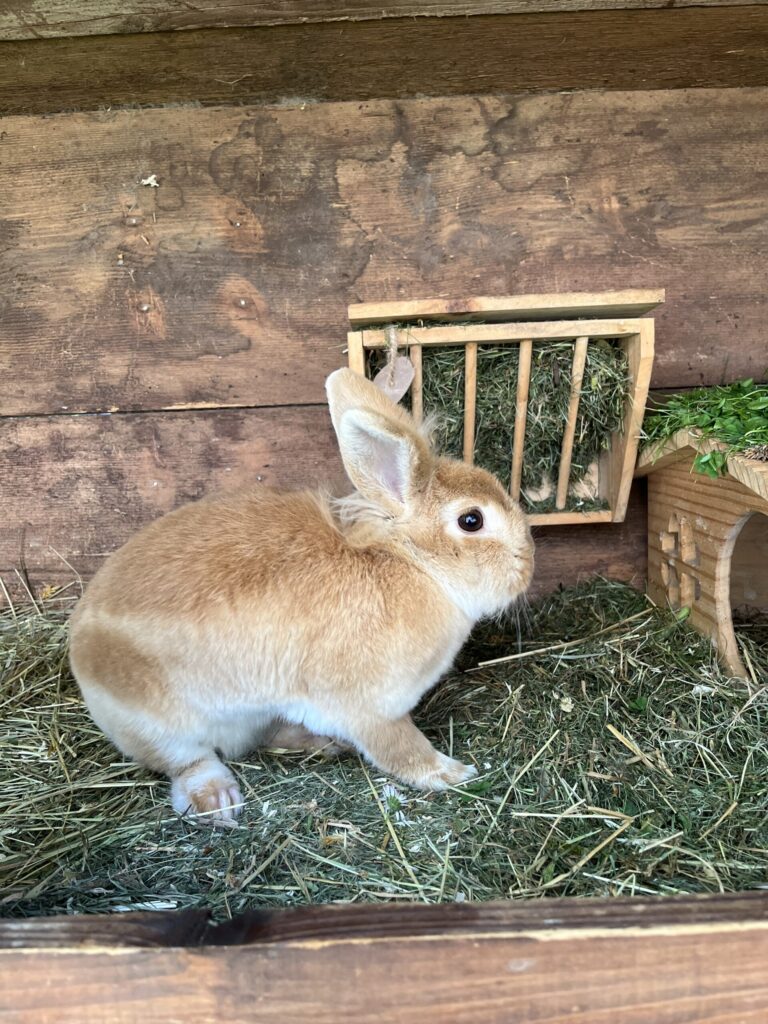
What if your small pet could finally tell you what it really needs?
You love your little companion. You give it the best enclosure, fresh food, and loving care. Yet some things remain a mystery:
- Why is your rabbit suddenly gnawing on the cage bars?
- Why does your hamster sit in the corner all the time?
- Why is your guinea pig acting up in the group?
- Why does your ferret flinch every time you touch it?
You’ve done everything by the book. But your gut tells you: Something isn’t right here.
This is exactly where animal communication can open a door. It can help you better understand your small pet’s quiet, subtle language – its feelings, needs, fears, and desires. This may provide clear guidance for your next steps.
What can change when you understand your small pet better:
- You can learn why it’s acting strangely and provide more targeted help.
- You may realize what’s stressing it out (noises, smells, other animals, you yourself?).
- There’s a chance it’s communicating physical sensations (e.g., “My paw hurts”), which can provide additional insight for the vet.
- You can announce changes (moving, a new enclosure, a new companion) in a way that might help your pet react more calmly.
- In cases of blockages, surrogate work (hypnosis and / or quantum work) can be helpful – no guarantees, but with many positive experiences.
Does this sound like an option for you? Then read on. Or schedule your animal communication session right away for greater clarity in your relationship with your small animal.
Why Small Animals in Particular May Need Especially Subtle Communication
Unlike dogs or cats, hamsters, guinea pigs, rabbits, and other small animals cannot bark or meow. They often express how they’re feeling through the subtlest of signals – which we sometimes misinterpret.
Your pet may “speak” through:
- Body tension & eye contact
- Gnawing, digging, hiding
- Eating habits & social behavior
- “Silence,” withdrawal, avoidance
Animal communication can help decipher these signals. I try to connect telepathically with your pet (using only a photo) and ask, if the animal responds:
- How are you feeling?
- Do you need anything (in particular)?
- Is something bothering you? If so, what is it and how can it be changed?
- What might enrich your life?
- Is there anything else you’d like to share?
Your animal does not need to be present. The connection works over a distance, regardless of whether it’s day or night. However, there is no guarantee that every animal will provide information.
When Animal Communication Can Be Helpful
1. In Cases of Puzzling Behavior
- Gnawing on furniture / bars
- Excessive digging or running in the wheel
- Refusing to take a sand bath (hamsters)
- Suddenly standing apart from the group (guinea pigs)
What we may be able to clarify: Is the animal experiencing stress, frustration, pain, or is this simply a quirk? You may be able to find out the reason.
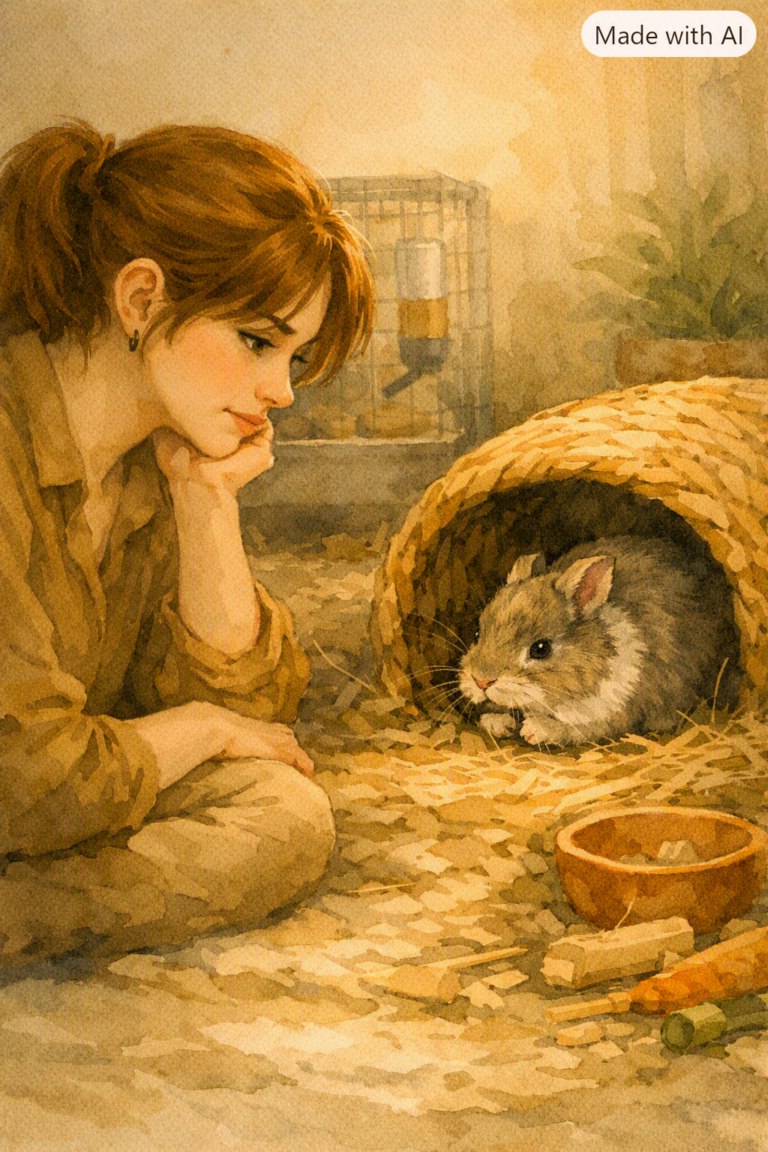
2. When stressed, anxious, or sad
- Hides more than usual
- Eats less or grooms itself compulsively
- Reacts fearfully to noises or being touched
- Flinches (in ferrets or rescued animals)
What we can try: Often, an unconscious blockage is behind this. Support can often be provided through surrogate work (hypnosis and / or quantum work).
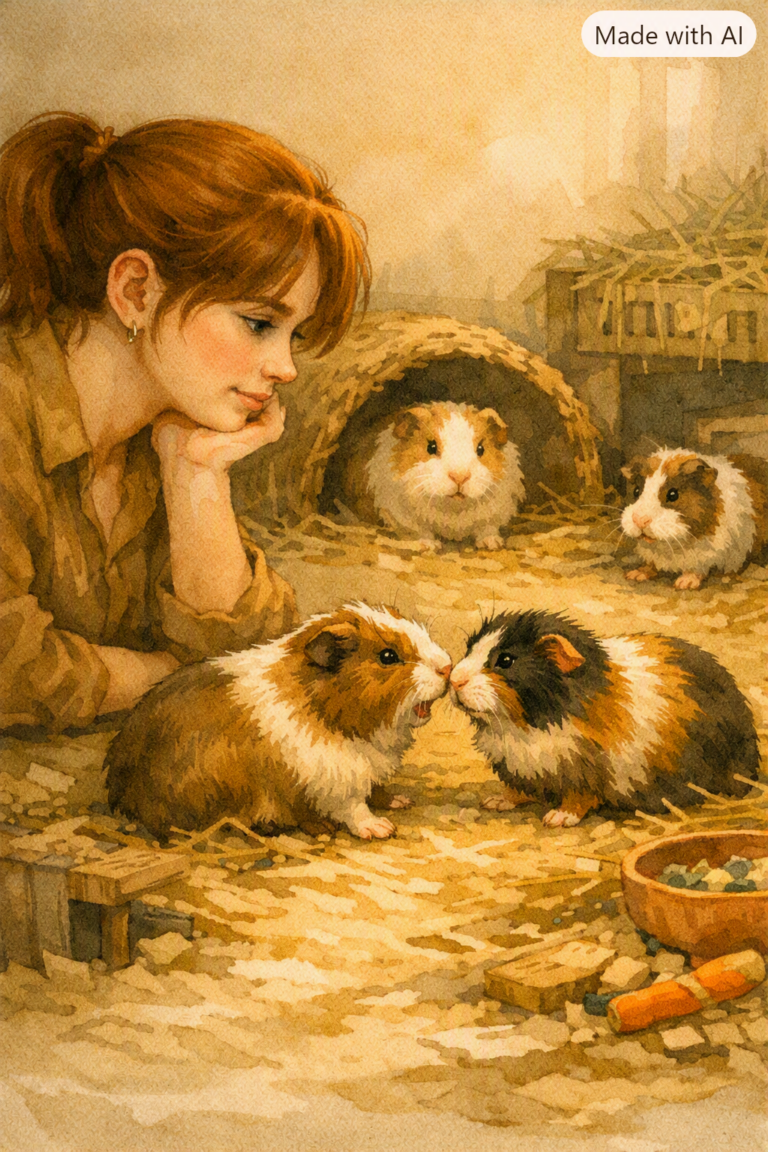
3. In cases of social tension (especially among guinea pigs, degus, and ferrets)
- An animal is being bullied or excluded
- Sudden scuffles for no apparent reason
- Unclear hierarchy
What a group analysis can offer: If the animals are receptive, I’ll speak with each one individually. You may gain insights into the group dynamics and ideas on how to promote harmony.
4. If you have health concerns (always as a supplement to a vet visit!)
- Your pet seems “under the weather,” but the vet can’t find anything wrong, and you’d like to know how your pet is feeling
- You’re wondering: Does it still have a zest for life?
- You want to know what might help them and if they have any (specific) wishes
What I might be able to ask (not a diagnosis!): The animal may be able to describe physical sensations (“My right paw feels uncomfortable”). This can serve as additional information for the treating veterinarian.
5. Before major changes or after a difficult past
- Moving, a new home, a new pet
- An animal from a shelter or animal rescue
- No bond with you; remains shy and distrustful
How animal communication can help: I can try to gently explain the change to your pet in advance. This may help alleviate their concerns. For past experiences, surrogate work can offer support.
How animal communication with small mammals works
- You describe your concern to me: for example, “My hamster gnaws on the cage bars every night.”
- I try to connect with your pet: using a recent photo (see my “About Animal Communication” page for details).
- I receive whatever I receive: this can be feelings, images, or inner “sentences.” Not every animal responds with the same clarity.
- You receive feedback: either as a written report or in person via Zoom (my recommendation), detailing what I have perceived.
Please note: There is no guarantee that the animal will always provide statements or suggestions for solutions. The results cannot be predicted or promised.
“Will this really work for my shy, nocturnal hamster / my anxious guinea pig?”
Maybe. The experience of many clients shows that even shy or nocturnal animals can “respond” during animal communication. The telepathic connection is independent of activity and location. But every animal is unique. Some communicate clearly, others only vaguely, or not at all.
What I can promise you: I approach this with respect and empathy. Your animal will not be stressed in any way. And afterward, you’ll learn what I’ve perceived. I can’t guarantee anything more than that.
For me, the basis of trust is very important for the success of a consultation and the success of such an approach. This was absolutely successful! Empathy and individual appreciation in the joint session were outstanding.
I can highly recommend Larissa.
Markus und Gisela Sieber
Real review and not AI-generated 😉
You now have two options:
- You keep guessing. You try changing their diet, rearranging their enclosure, or offering more activities, without knowing if it’s the right thing to do.
- You try animal communication. You may gain new, surprising insights. And with a little luck, you’ll develop a deeper connection with your small animal.
I invite you to choose option 2 – without pressure, but with curiosity.
Your Next Step
Schedule your animal communication session for your furry friend today.
You will receive (possibly):
- A written protocol of my perceptions, or a recorded audio version of the animal communication session, or a personal conversation with me via Zoom (my recommendation), during which I will describe my perceptions in detail using facial expressions, gestures, voice, and body language
- Specific recommendations for action (if the animal has provided any)
- The option for supportive surrogate work (if desired)
Perhaps your animal will thank you with more trust, more relaxation, or a new look in their eyes. Perhaps not. But it’s often worth a try.
AI-generated image
Note:
Animal communication and / or surrogate work are not a substitute for veterinary diagnosis and / or treatment.
There is no guarantee that the animal will always provide statements or, if applicable, suggest solutions.
Furthermore, the success of surrogate work cannot be guaranteed.
In addition, my services are intended for healthy people and animals.
The text displayed above was generated with the help of AI.
The photos shown above were also generated using AI (except for the review, which is real).
Living / deceased animal
Clarify your open questions- 5 questions
- Additional extra question(s) (maximum 5)
- 1 Message from you to your animal
- 1 message from your animal to you
- Written protocol of the animal communication
- Personal information transfer (via Zoom)
- Access to the exclusive client area
- Information material (in the client area)
- Preparation checklist
- Initial E-Mail Support
- Initial queries possible
Book Preliminary talk / Animal communication
- The information transfer will take place online (via Zoom). If you’d also like a written transcript of the conversation between me and your pet, you can book that as an add-on.
- Click on „Done“ after booking.