Animal communication
bird
Sometimes a deeper understanding begins where
ordinary communication reaches its limits.
151€ (for 1 Animal communication)
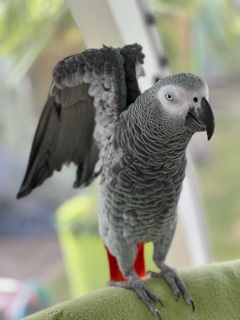
Animal Communication for Birds (Canaries, Parrots, Budgies, and Other Feathered Companions)
What if your bird could finally tell you what’s on its mind?
You live with an extraordinary creature. Your bird is no ordinary pet – it is intelligent, sensitive, emotional, and often more complex than its small body would suggest. Yet sometimes things remain a mystery:
- Why is your parrot suddenly plucking its feathers?
- Why has your canary stopped singing?
- Why does your tame bird bite you, even though it knows you?
- Why is your budgie sitting apathetically in the corner?
You’ve tried a lot: a larger aviary, varied food, new toys, free flight. Maybe you’ve even been to the vet. But your bird’s behavior remains a mystery. Your gut feeling tells you: Something isn’t right here.
This is exactly where animal communication can open a door. It can help you better understand your bird’s silent, emotional language – its fears, needs, memories, and desires. This may provide clear guidance on how to proceed.
What can change when you understand your bird better:
- You can learn why it’s behaving strangely and, ideally, provide more targeted help.
- You may recognize what is stressing him (noises, objects, other animals, your own mood).
- There is a chance that he will communicate physical sensations (“It itches,” “It’s pressing here”). This can be an additional clue for the veterinarian.
- You can announce changes (moving, a new environment, pet sitting while you’re on vacation) in a way that may help your bird react more calmly.
- For old emotional blocks or past experiences, surrogate work (hypnosis and/or quantum work) can be helpful. There are no guarantees, but there have been many positive experiences.
Does this sound like an option for you? Then schedule your animal communication session right away for greater clarity in your relationship with your feathered friend.


Why Birds in Particular May Require a Particularly Subtle Form of Communication
Birds are not “simple” animals. They possess characteristics that enable deeper communication, but also make it challenging:
- Emotional depth: Parrots can possess the emotional intelligence of a toddler. Canaries and budgies also display distinct emotions such as sadness, joy, jealousy, or fear.
- Excellent memory: A single traumatic experience can have lifelong effects and trigger fears.
- Sensitive perception of energy: Birds often react sensitively to moods, tensions, or changes in their environment.
- Complex social needs: Many birds rely on close bonds with other birds or humans. If this is missing, behavioral issues may arise.
Animal communication can decipher these signals. I try to connect telepathically with your bird (using only a photo) and ask, if the animal responds:
- How are you feeling?
- What do you need?
- Is something bothering you?
- What would enrich your life?
- Is there anything else you’d like to share?
Your bird does not need to be present. The connection, if established, works across distance, regardless of the time of day. However, there is no guarantee that every animal will provide information.
When Animal Communication Can Be Helpful
1. In cases of self-destructive or unexplained behavior
- Feather plucking or self-mutilation
- Sudden aggressive biting toward familiar people
- Loss of song (in songbirds such as canaries)
- Refusal to eat
What we may be able to clarify: Is there physical itching, frustration, boredom, grief, or stress? You can get an idea of the possible cause. Of course, only after a veterinary examination.
2. In cases of emotional blockages
- Avoiding certain objects, people, or situations
- Mood swings or withdrawal
- Restlessness or unusual behavior
What we can try: Often, a blockage is the underlying cause. Support can frequently be provided through surrogate work (hypnosis and / or quantum work).
3. When it comes to overall well-being
- You ask yourself: “Is my bird truly happy, or just quiet?”
- You’re looking for the best activities and mental stimulation
- Your bird shows little interaction or seems apathetic
What we can discover: What excites him? What does he want in his daily life? Where might he feel something is missing?
4. Regarding health concerns (always as a supplement to the vet!)
- Your bird seems “not well,” but the vet can’t find anything wrong, and you’d like to know your bird’s perspective
- You’re wondering: Does my bird still have a zest for life?
- You want to know what might be good for him and if he has any (specific) wishes
What I can ask (no diagnosis!): The bird may be able to describe physical sensations (“It itches everywhere,” “My breathing is heavy”). This can serve as additional information for the treating veterinarian.
5. Before major changes or after a difficult past
- Moving, renovations, a new home
- Pet sitting or a new partner (human or animal)
- An animal from a shelter or rescue organization
What animal communication can do here: I can try to gently explain the change to your bird in advance. This may help alleviate any concerns. For past experiences, surrogate work can be helpful.
How animal communication with birds can work
- You describe your concern to me: e.g., “My parrot has been plucking its feathers since we moved.”
- I try to connect with your bird: using a recent photo (detailed information on my “About Animal Communication” page).
- I receive what I receive: this can be images (memories, scenes), emotions, or inner “words.” Not every bird responds with the same clarity.
- You’ll receive feedback: as a written report of what I’ve perceived or you’ll receive all the information – including tone of voice, facial expressions, gestures, and body language – directly from me via Zoom (my recommendation).
Please note: There is no guarantee that the bird will always provide statements or suggestions for solutions. The results cannot be predicted or promised.
“My bird can’t talk (or maybe it can). Can animal communication still be helpful?”
Perhaps. Birds don’t need to master human words to communicate telepathically. Spoken language (as with parrots) is often just the tip of the iceberg. Beneath it lie feelings, images, and sensations that often cannot be put into words. Even a canary that doesn’t speak can convey clear impressions in this way.
The experience of many bird owners shows that even seemingly “silent” birds can respond through animal communication. But every animal is unique. Some communicate clearly, others only vaguely or not at all.
What I can promise you: I will proceed with respect and empathy, and afterward you will learn what I have perceived. I cannot guarantee more than that.
For me, the basis of trust is very important for the success of a consultation and the success of such an approach. This was absolutely successful! Empathy and individual appreciation in the joint session were outstanding.
I can highly recommend Larissa.
Markus und Gisela Sieber
Real review and not AI-generated 😉
You now have two options:
- You can continue to puzzle over it. You can try changing their diet, rearranging the cage, or offering more activities, without knowing if it’s the right thing to do.
- You try animal communication. You may gain new, surprising insights into your bird’s world. And with a little luck, a deeper connection with your feathered companion will develop.
I invite you: Choose option 2. No pressure, just curiosity.
Your Next Step
If you’d like, book your animal communication session now for canaries, parrots, budgies, or other bird species.
You will receive:
- A written report of my observations
- Specific recommendations for action (if the bird has provided any)
- The option for supportive surrogate work (if desired)
Perhaps your bird will thank you – with more trust, greater relaxation, or a new song. Perhaps not. But it’s often worth a try.
Note:
Animal communication and / or surrogate work are not a substitute for veterinary diagnosis and / or treatment.
There is no guarantee that the animal will always provide statements or, if applicable, suggest solutions.
Furthermore, the success of surrogate work cannot be guaranteed.
In addition, my services are intended for healthy people and animals.
The text displayed above was generated with the help of AI.
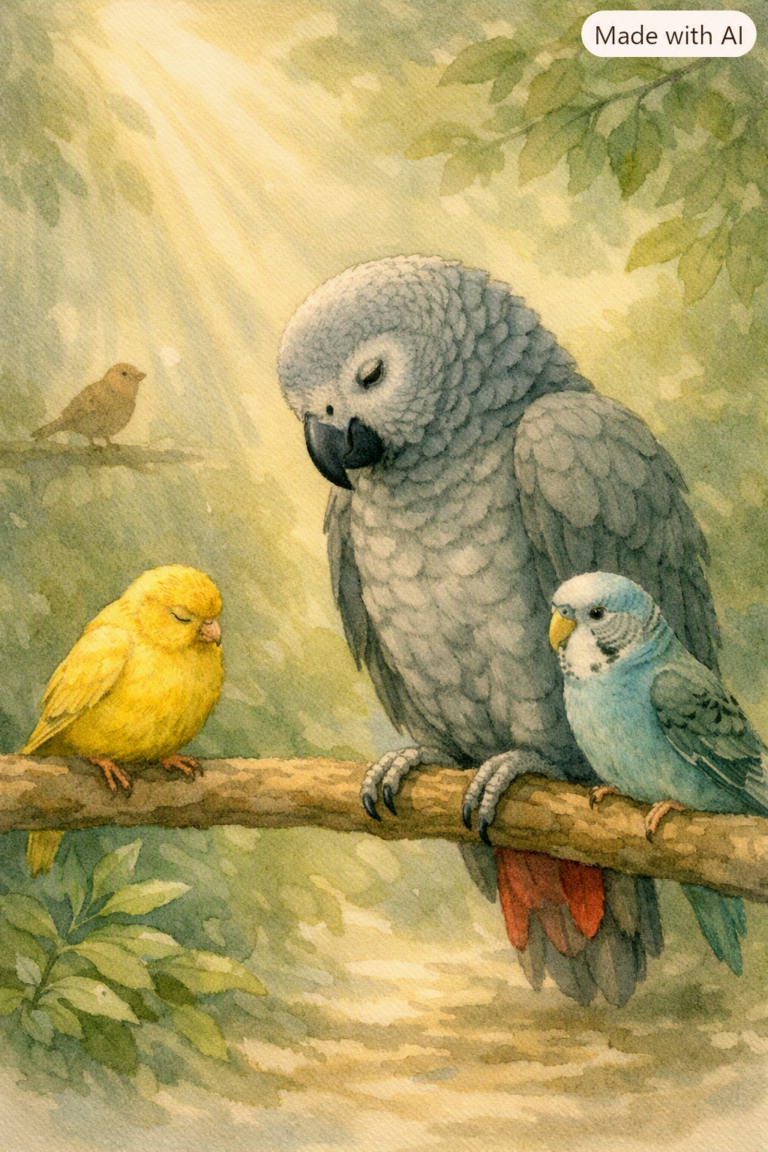
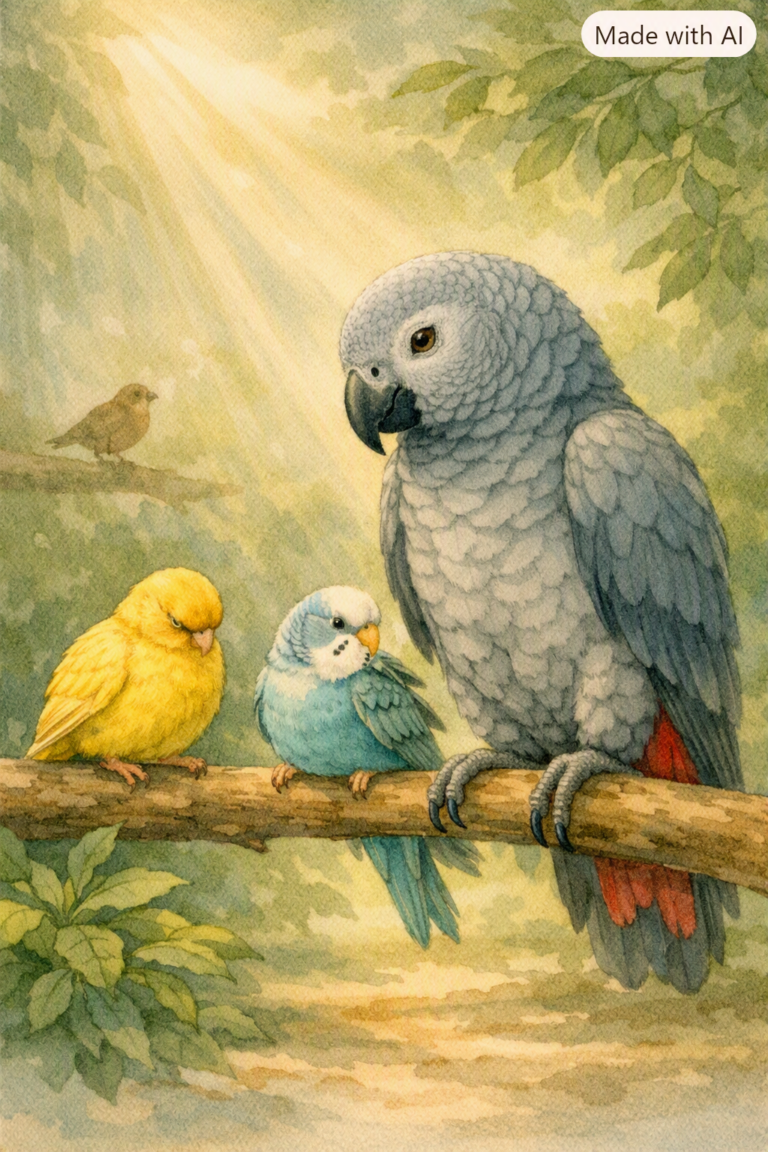
The photos shown above were also generated using AI (except for the review, which is real).
Living / deceased animal
Clarify your open questions- 5 questions
- Additional extra question(s) (maximum 5)
- 1 Message from you to your animal
- 1 message from your animal to you
- Written protocol of the animal communication
- Personal information transfer (via Zoom)
- Access to the exclusive client area
- Information material (in the client area)
- Preparation checklist
- Initial E-Mail Support
- Initial queries possible
Book Preliminary talk / Animal communication
- The information transfer will take place online (via Zoom). If you’d also like a written transcript of the conversation between me and your pet, you can book that as an add-on.
- Click on „Done“ after booking.