
Animal communication donkey (donkeys)
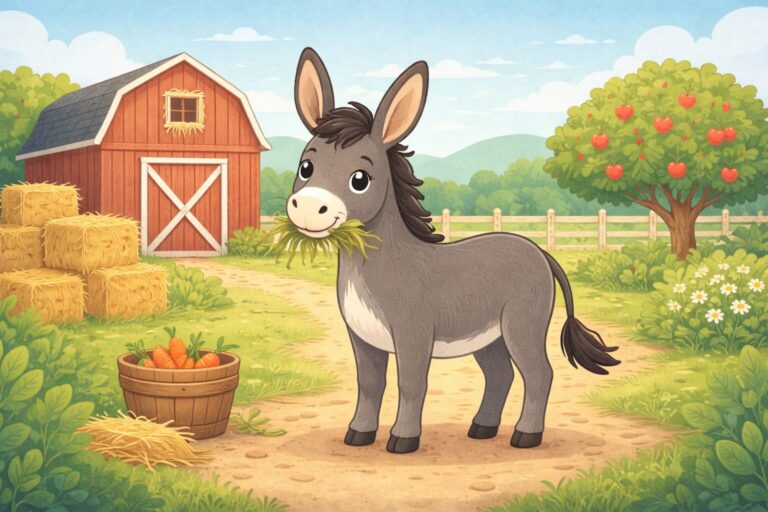
Discover your donkey’s gentle pride – understand what he really thinks
You know his stoic gaze, his stubborn refusal to move, and those moments of obstinate clarity that sometimes drive you to despair. Your donkey is not a miniature horse. He is a primal, deeply intelligent, and social creature with a distinctive personality. Its apparent stubbornness is often just misunderstood communication.
Perhaps you have already tried everything to solve the puzzle:
- You have checked its feed ration and adjusted its minerals.
- The vet has found nothing wrong.
- You offer it companionship, security, and species-appropriate exercise.
- You have patience, so much patience.
But why does it suddenly refuse to cross a certain threshold? Why does it cry out into the silence for no apparent reason? Why does it refuse to move from point A to point B, even though the path is clear? You sense that its behavior makes sense, but you lack the key to decipher it.
Here, animal communication acts as an interpreter for your donkey’s silent language. Imagine finally being able to know whether its “no” is due to fear, pain, or simply a well-thought-out plan of its own. That’s the difference between a power struggle and a cooperative solution.
Why donkeys are ideal conversation partners:
Donkeys are not just persistent. They are masters of nonverbal communication with innate qualities that enable deep exchange:
- Innate caution & high intelligence: Their survival instinct makes them keen observers. They carefully evaluate every situation. What we dismiss as “stubbornness” is often a clear “I need more information to be sure.”
- Deep social & emotional memory: Donkeys remember friendships and insults for a lifetime. Unprocessed experiences (a loud bang, unfair treatment) have a lasting impact on their behavior.
- Clearly communicated boundaries: A donkey says “stop” clearly. Understanding these boundaries instead of fighting them is the path to genuine trust.
- Strong bonding power: Once won, their trust is deep and loyal. They communicate constantly with their humans. We just have to learn to hear their language.
Animal communication brings clarity and peace in these situations:
1. In cases of seemingly stubborn or fearful behavior
- Refusal to be led, tied up, or to enter certain areas.
- Sudden screaming or increased alertness without any apparent trigger.
What we can clarify:
Is he seeing or sensing something that you are not aware of? Does he have a negative memory associated with this place? Does he feel insecure in his role?
2. For questions about health and well-being
- Apathy or reduced appetite, even though the check-up was fine.
- Unusual protective posture or sensitivity to touch.
What we can clarify:
Is there diffuse pain or discomfort that he cannot clearly show? How does he feel about his quality of life, especially in old age?
3. Regarding social dynamics with other dogs or animals
- Jealousy, withdrawal, or aggressive behavior in the group.
- Problems with socialization or after a separation.
What we can clarify:
Does he feel uncomfortable in the hierarchy? Is he mourning a friend? What does he need to feel safe and accepted?
4. To come to terms with the past or prepare for the future
- For donkeys that have been poorly kept or have an unknown history.
- Before a move, stable renovation, or the arrival of a new roommate.
What we can do:
Understand old memories and work on them in a targeted manner (e.g., through representative work; this can be done through surrogate hypnosis or surrogate work using quantum work). Explain changes to the donkey and thus give it security for a new beginning.
“But my donkey is just stubborn! Will this work?”
Precisely because donkeys are so clear and consistent in their communication, they are grateful and honest conversation partners. In animal communication, they communicate through:
- Physical sensations: (“A stinging sensation in my shoulder when I turn my head”)
- Simple, powerful images: (“The memory of the cramped trailer”)
- Clearly identifiable feelings: (“Insecurity,” “boredom,” “joy when you come”)
This is how easily and stress-free we understand him:
- You tell me about yourselves: In a short preliminary conversation, you describe your concerns.
- I make contact: I establish a telepathic connection using a photo of your donkey. He is completely relaxed in his familiar surroundings.
- I translate his messages: I receive what he tells me and structure it for you.
- You receive your answers: In a written report, for example, you learn what is going on inside him and what he wants to tell you.
Reviews from satisfied owners
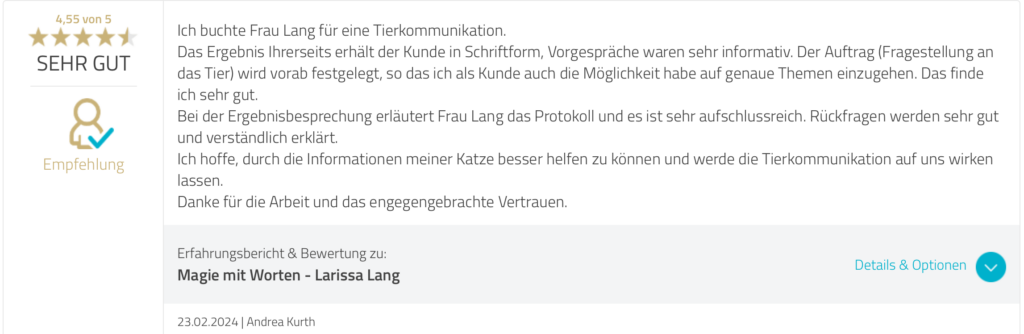
I booked Ms. Lang for an animal communication session.
The client receives the result in writing, preliminary talks were very informative. The assignment (questions for the animal) is determined in advance, so that I as the client also have the opportunity to address specific issues. I find that very good.
At the results meeting, Ms. Lang explains the protocol and it is very informative. Any queries are explained very well and clearly.
I hope to be able to help my cat better with the information and will let the animal communication work on us.
Thank you for your work and the trust you have placed in us.
Andrea Kurth
Satisfied dog owner
Your next step away from conflict and toward cooperation
You don’t have to break his will. You can understand his meaning. Animal communication ends the guesswork and gives you the tools to respond to him in his unique way. Become the partner he trusts because he is finally understood.
Behind that stoic gaze, an intelligent, communicative companion is waiting for someone to speak his language. Most donkey owners who have taken this path are overwhelmed by how pragmatic and profound the messages are and how much peace it brings to the relationship.
Book your animal communication session for your donkey now.
Decipher the code of its behavior and transform challenges into an incomparable partnership. I look forward to conveying its messages to you.
Note:
Animal communication and / or surrogate work are not a substitute for veterinary treatment.
However, after consultation with the practitioner, animal communication and / or surrogate work can be used as a supportive measure.