
Animal communication chinchilla (chinchillas)
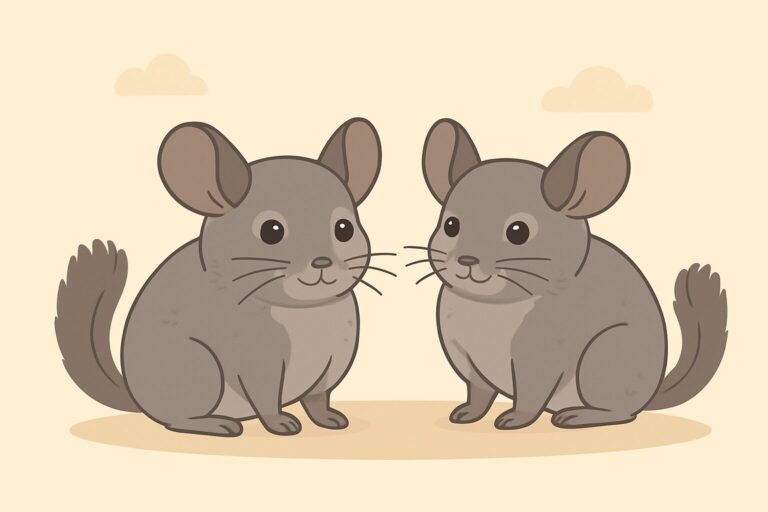
Finally understand what’s really going on behind those big, nocturnal eyes
Imagine if you could enter the mysterious world of your chinchilla.
You love its soft, plush fur, its acrobatic jumps, and the curious way it explores its surroundings. But sometimes it just remains a mystery. Why does it suddenly refuse to eat from your hand, even though it did so yesterday? Why does it nibble on a specific corner of wood, even though it has plenty of alternative gnawing material? Does it seem particularly restless after its exercise time, or does it hide away for an unusually long time?
You’ve done everything: the huge aviary, the special sand bath, the perfect temperature, and the quiet environment. The conditions are optimal, and yet you don’t feel like you really understand it.
This is where animal communication can help. It can be your personal interpreter for the silent questions and unspoken needs of your velvet-pawed roommate. It’s the difference between good care and a deep, respectful relationship on a soul level.
Why your chinchilla is the perfect conversation partner (even if it is nocturnal)
Chinchillas are not “easy” pets. They are highly sensitive, long-lived creatures with a complex disposition:
- Extreme sensitivity: Their world is ruled by the slightest sensory impressions. A draft that is barely perceptible to you, the subliminal hum of an electrical appliance, or a new scent in the air can cause them great stress.
- Clear yes / no behavior: Chinchillas are masters of subtle communication. They do not show their discomfort or preferences through vocalizations, but through behavior that we often misinterpret.
- Deep body memory: A single negative experience (e.g., a loud noise while sand bathing, an unpleasant touch) can leave a deep impression and have a lasting effect on future behavior.
- Demanding social life: Whether kept alone (with lots of human contact) or in pairs, their social needs are complex. Harmony is everything to them.
In these situations, animal communication can finally give you clarity:
1. In the case of puzzling behavioral changes:
- Sudden cage chewing or excessive sand bathing.
- Refusal of treats or toys that it used to love.
- Unusual aggression or, conversely, noticeable apathy.
What we find out:
Is physical discomfort behind it? Does it feel threatened by a change in its environment? Or is it simply looking for a different form of mental stimulation?
2. When it comes to well-being and enrichment:
- You ask yourself: “Is it bored despite the climbing landscape? Is it missing something special?”
- It hardly accepts offers of contact or seems constantly “alert.”
What we learn:
What kind of play or exploration does it really want? Does it need more hiding places at a certain height? Does it feel comfortable in its current social situation (alone / in pairs)?
3. When preparing for change (chinchillas love routine!):
- A move, vacation care, or the redesign of the aviary is coming up.
- A new companion is moving in.
What we can do:
We can explain the change to your chinchilla in advance, alleviate its fears, and obtain its “consent.” This greatly reduces stress and maintains vital trust.
4. For support with health issues (in consultation with your veterinarian!):
- The veterinarian cannot find a clear cause, but your gut feeling tells you that something is wrong.
- You want to understand if it is in pain or where it feels uncomfortable.
What we can ask:
Your chinchilla can often describe physical sensations very precisely (“a twinge in the stomach,” “itching in the left ear”), which can be a valuable addition to the veterinary examination.
What animal communication can do here:
Many chinchillas carry unprocessed experiences with them. Through animal communication, I can probably find out what happened and help your chinchilla overcome its negative memories in a targeted manner. For example, with the help of surrogate work. This can be done through surrogate hypnosis or surrogate work using quantum work .
“But my chinchilla is nocturnal and shy. Can this even work?”
Absolutely. The telepathic connection is independent of the time of day or activity level. On the contrary: in the tranquility of the mental connection, shy and nocturnal animals are often surprisingly communicative because they can finally “speak” unfiltered and without stress.
Chinchillas often communicate through:
- Very specific sensory impressions (“The new wood smells funny,” “There’s a train coming from there”).
- Physical sensations (“My paw feels funny when I jump”).
- Simple, clear emotions (“Caution,” “Contentment,” “Slight irritation”).
Our session together is simple and discreet:
- You tell me about your chinchilla: In a brief, non-binding preliminary discussion, you describe what is on your mind.
- I make contact: Using a photo of your animal, I establish a silent, respectful connection. Your chinchilla is not disturbed and can continue with its usual daily (or nightly) routine.
- I receive and translate: I perceive the messages and structure them for you.
- You receive the answers: I convey all the insights to you, for example in a written report.
Reviews from satisfied owners
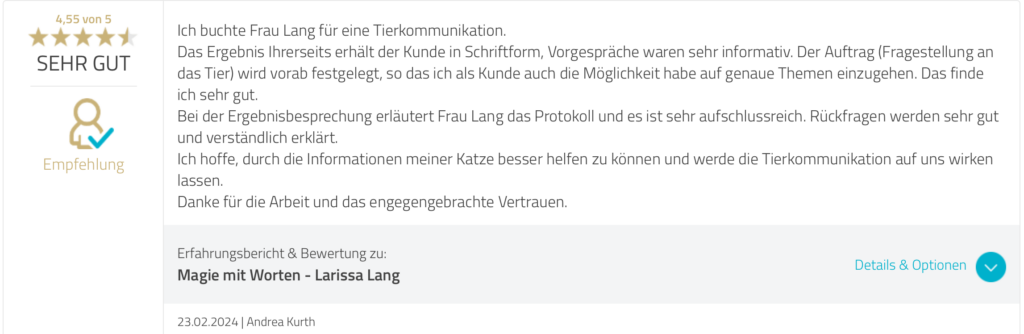
I booked Ms. Lang for an animal communication session.
The client receives the result in writing, preliminary talks were very informative. The assignment (questions for the animal) is determined in advance, so that I as the client also have the opportunity to address specific issues. I find that very good.
At the results meeting, Ms. Lang explains the protocol and it is very informative. Any queries are explained very well and clearly.
I hope to be able to help my cat better with the information and will let the animal communication work on us.
Thank you for your work and the trust you have placed in us.
Andrea Kurth
Satisfied dog owner
For me, the basis of trust is very important for the success of a consultation and the success of such an approach. This was absolutely successful! Empathy and individual appreciation in the joint session were outstanding.
I can highly recommend Larissa.
Markus und Gisela Sieber
Satisfied clients

Your next step:
Stop guessing. Give yourself and your chinchilla the hearing you deserve.
Book your animal communication session now and become a trusted companion in its mysterious world.
I look forward to “translating” your chinchilla for you.
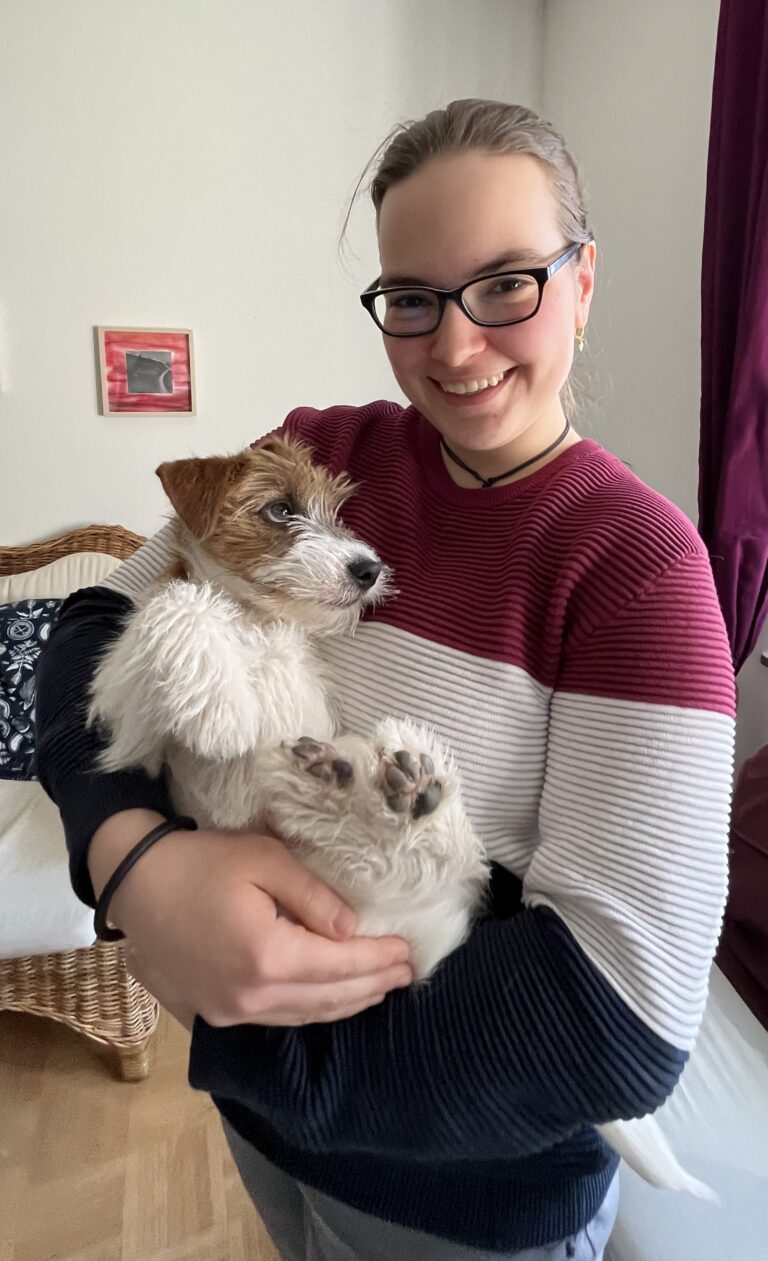
Note:
Animal communication and / or surrogate work are not a substitute for veterinary treatment.
However, after consultation with the practitioner, animal communication and / or surrogate work can be used as a supportive measure.