
Animal communication
therapy animals
Sometimes a deeper understanding begins where
ordinary communication reaches its limits.
151€ (for 1 Animal communication)

AI-generated image
Understand the feelings of your empathetic healer
Your therapy animal is a silent therapist with four paws. With an intuitive gift for opening hearts and touching souls that makes words superfluous. Day after day, it gives unconditional affection, unconsciously absorbs tension, and provides comfort. But sometimes, when you look into its calm eyes, you wonder: How are YOU doing? Do you take on people’s worries? Where do you recharge your batteries?
You experience its calming effect on others and see how devotedly it cares for each person. But its innermost feelings and needs remain hidden. You wish you could ask: “What gives you energy in this work? What makes you tired? How can I better support YOU?”
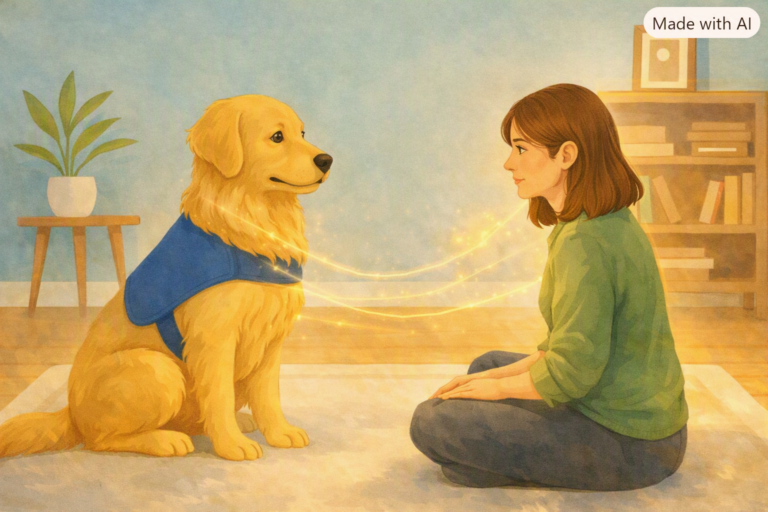
This is exactly what animal communication creates a safe space for. It allows you to feel the world through the heart of your animal therapist and understand what nourishes, challenges, or burdens him in his unique role.
What is animal communication and why is it so important for therapy animals?
Animal communication is an empathetic dialogue from soul to soul. Your therapy animal is not about what is shown, but about what is received and processed behind the gentle facade.
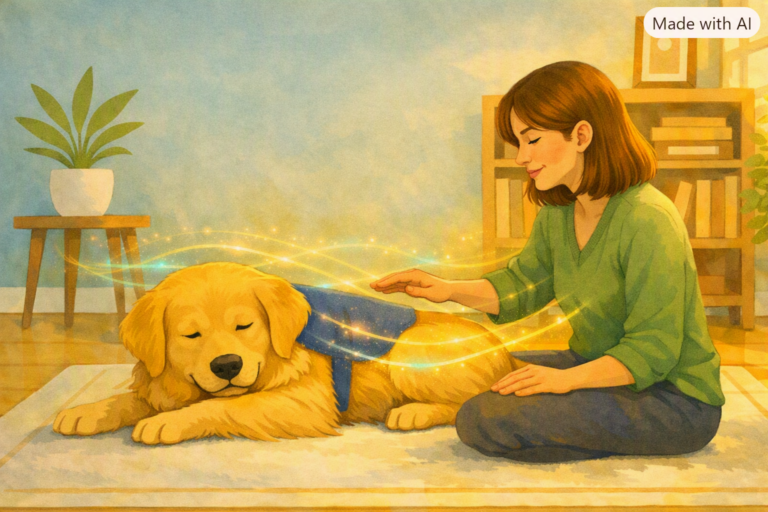
Your partner works in a field of intense human emotions. They absorb not only affection, but also unconscious fears, sadness, and the energetic burden of others. Animal communication helps you to make this invisible emotional burden visible and actively help your healer to protect and cleanse themselves.
When can animal communication deepen your healing partnership?
You trust in their natural gift and gentle nature. But consciously caring for their emotional well-being makes you an even more effective team.
1. You want to strengthen his emotional balance and self-protection
- After therapy sessions, your animal seems unusually exhausted, apathetic, or increasingly seeks rest.
- You wonder whether he takes the emotions of certain clients or places home with him.
- You want to help them maintain healthy energetic boundaries and detach themselves from foreign energies.
What animal communication can do here:
You learn how your partner processes the emotions they have collected. Are there certain energies or situations that are particularly challenging for them? What helps them to cleanse themselves emotionally and ground themselves? This knowledge is crucial for preventing burnout and maintaining their healing power in the long term.
Many therapy animals carry unprocessed experiences with them. Through animal communication, you can find out exactly what happened and help your animal therapist overcome the negative memories in a targeted manner. For example, with the help of surrogate work. This can be done through surrogate hypnosis or surrogate work using quantum work.
2. Changes in their willingness or behavior
- Their usual enthusiasm for work is waning.
- Your animal is displaying uncharacteristic avoidance behavior or seems stressed in otherwise familiar settings.
- Their usually attentive and patient nature seems absent or irritable.
What animal communication can do here:
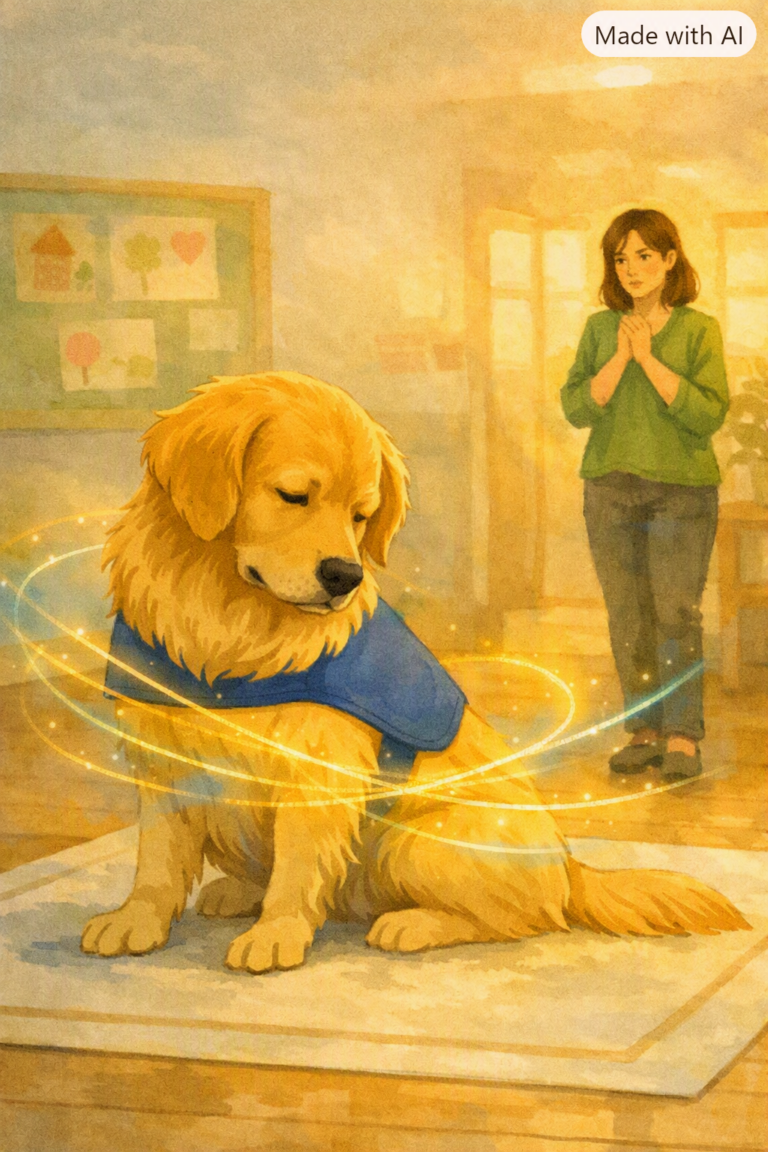
Such signals are often a cry for help. They can be caused by emotional saturation, an unspoken physical discomfort, or a negative experience with a client. Animal communication can uncover the cause so that you can offer exactly the right support, e.g., more breaks, a change in work schedule, or rest.
3. Before new challenges or after intense phases
- A new, demanding clientele (e.g., traumatized people) is coming.
- You have just gone through a particularly intense phase of therapy or a traumatic experience.
- There are changes in your usual environment or routine.
What animal communication can do here:
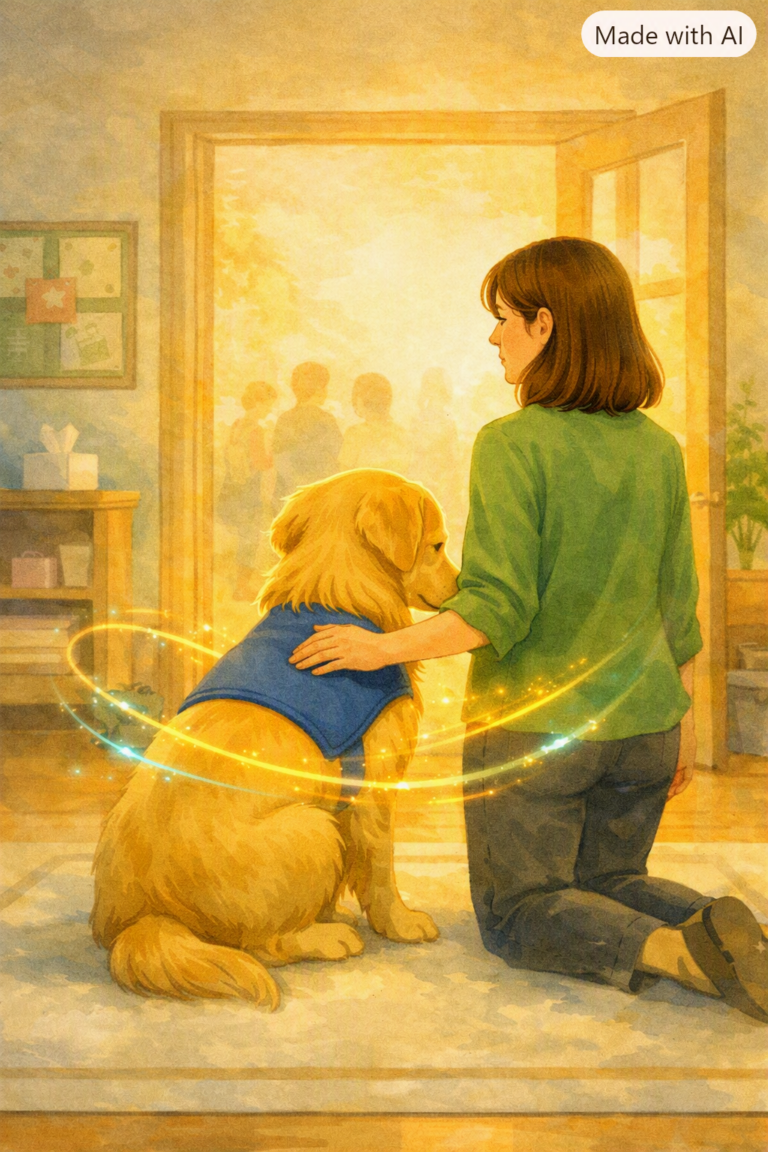
You can prepare your partner for the new situation or process a past event together. How does it feel? Does it perhaps have its own insecurities or special preferences? This joint coordination creates security and strengthens team trust.
4. You want to appreciate his work and understand his perspective
- You greatly admire his patient and healing presence.
- You would like to learn more about his own experiences and motivations.
- You want to know what gives him joy and fulfillment in his work.
What animal communication can achieve here:
You gain a deeply moving insight into the consciousness and calling of your therapy animal. You can express your gratitude on a level that he understands at his core. This appreciative reflection strengthens your bond and confirms his important role.
How does animal communication work for your therapy animal?
- Preliminary discussion with you: You describe your concerns to me and tell me about the valuable work and nature of your animal colleague.
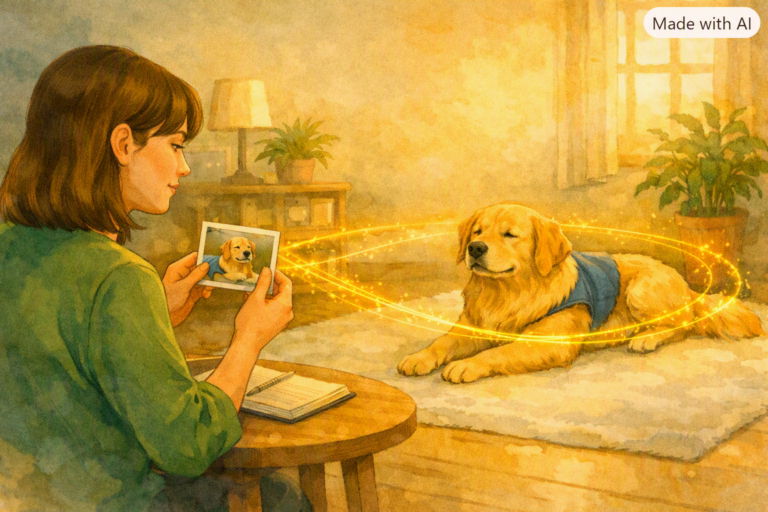
- Establishing contact: I make telepathic contact with your therapy animal. This is done using a photo. Your animal can remain in its familiar surroundings during this process.
- Receiving the messages: Therapy animals often communicate feelings of exhaustion or fulfillment, images of specific people or places, or a desire for certain compensatory activities. I carefully observe these impressions.
- Conveying the answers: I share all messages and impressions with you in a personal conversation (via Zoom) or a written report.
Your likely concerns
- “His effect is based on intuition and naturalness. Isn’t such a conversation artificial?”
Precisely because his effect is so natural, protecting his original, unspent joy is so important. This communication is not an intervention, but a tool of prevention. It helps to keep the source of his healing power, his own mental health, pure and protected. - “He loves his work and the people. Why should he be burdened?”
His love and empathy are precisely the qualities that make him vulnerable to emotional exhaustion. Regularly checking his inner resources is not criticism, but the highest form of recognition. Many owners report that after clarification, their animals return to their work with greater ease and presence. - “I don’t want him to lose his neutral and open attitude.”
My approach is always respectful and non-directive. It is not about “weaning” him off anything, but about giving him a voice for his own needs. A contented and balanced animal can maintain its neutral, healing presence much better and more sustainably.
For me, the basis of trust is very important for the success of a consultation and the success of such an approach. This was absolutely successful! Empathy and individual appreciation in the joint session were outstanding.
I can highly recommend Larissa.
Markus und Gisela Sieber
Real review and not AI-generated 😉
Your next step: caring for those who care for others
If you are ready to listen to your empathetic therapist and take your partnership to a new level of mutual understanding, now is the right time.
Whether for balance, prevention, or as a sign of your deep appreciation, I am here to support you as an understanding mediator.
Your healer deserves to have their inner life listened to as well.
Teams who have chosen this path of conscious reflection report a new depth in their connection and a noticeable increase in their animal’s well-being.
Give your therapy partner a listening ear. Book the conversation that will touch their heart now.
Note:
Animal communication and / or surrogate work are not a substitute for veterinary diagnosis and / or treatment.
There is no guarantee that the animal will always provide statements or, if applicable, suggest solutions.
Furthermore, the success of surrogate work cannot be guaranteed.
In addition, my services are intended for healthy people and animals.
The text displayed above was generated with the help of AI.
The photos shown above were also generated using AI (except for the review, which is real).
Living / deceased animal
Clarify your open questions- 5 questions
- Additional extra question(s) (maximum 5)
- 1 Message from you to your animal
- 1 message from your animal to you
- Written protocol of the animal communication
- Personal information transfer (via Zoom)
- Access to the exclusive client area
- Information material (in the client area)
- Preparation checklist
- Initial E-Mail Support
- Initial queries possible
Book Preliminary talk / Animal communication
- The information transfer will take place online (via Zoom). If you’d also like a written transcript of the conversation between me and your pet, you can book that as an add-on.
- Click on „Done“ after booking.